

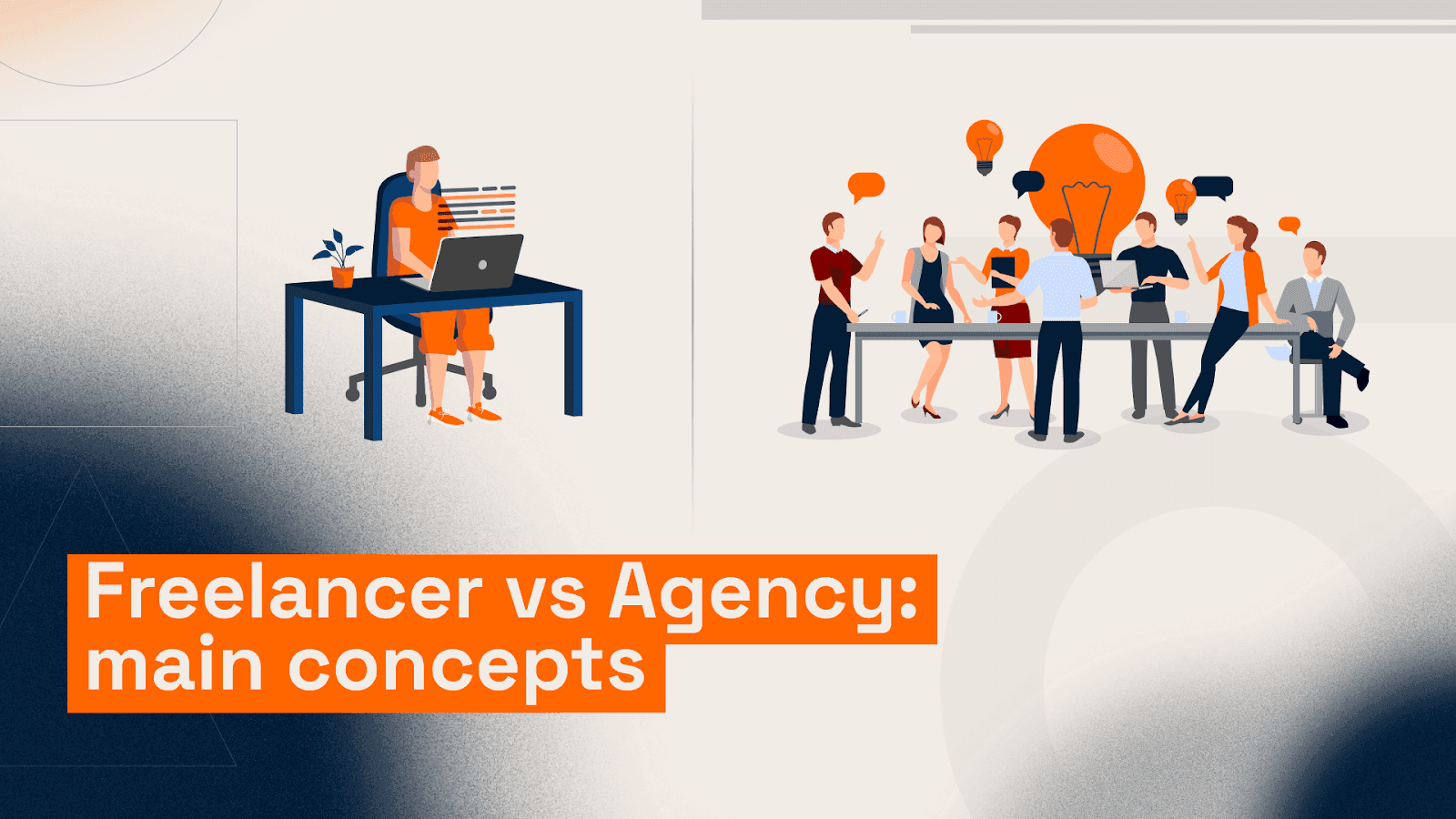
A freelancer is a good fit for small, clearly defined tasks. An agency works better for complex projects where stability and accountability matter. Outstaffing, as we do at Osmium, combines the flexibility of solo specialists with the control of a dedicated team. The right choice depends on the workload, risk level, deadlines, and quality requirements.
Company executives often hesitate: should they hire a freelancer or an agency? In this article, we clarify the differences between these cooperation models, conduct a working process comparison, and highlight the difference in collaboration.
What do “freelancer” and “agency” mean in delivery?
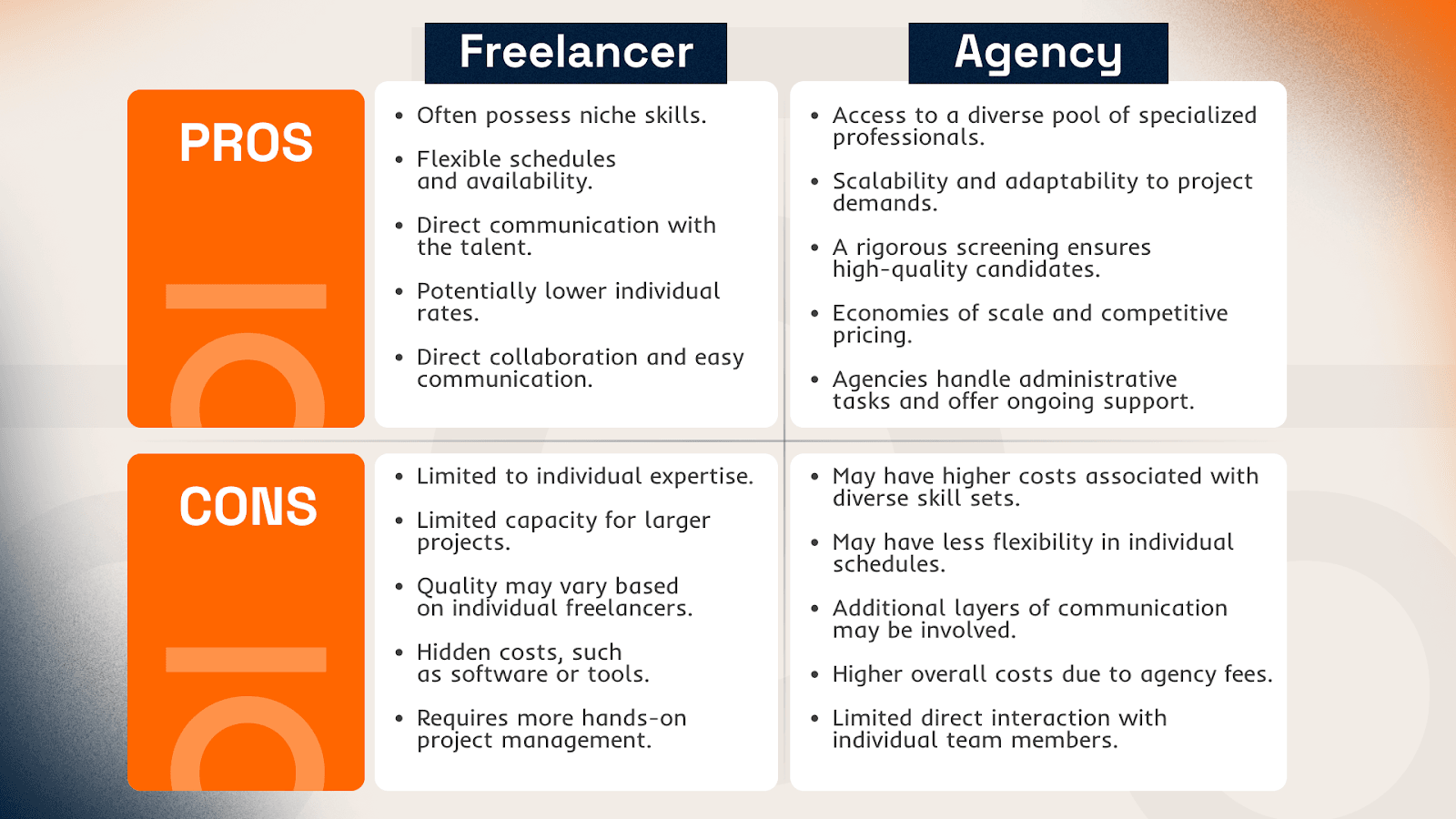 An independent contractor is a single specialist who takes on a specific task. A service company is a team that organizes the workflow, monitors quality, and can quickly replace a specialist if needed. These models differ in terms of responsibility levels, scope ownership, the presence of a Service Level Agreement (SLA), and the structure of the work process.
The difference between freelancer vs. agency starts with how much responsibility each side carries. Solo freelancer meaning: the specialist independently plans their schedule and sets the rates. They participate in projects under contract or partnership conditions without a permanent employment contract. This path is typical for those who build a freelance career.
The agency structure consists of employees with various specializations, each playing a specific role. The team includes a project manager who organizes the workflow and monitors task completion, quality assurance specialists, and well-defined internal processes. A delivery team also has a bench — a pool of ready-to-join experts kept in reserve. They can step into a project quickly or replace a teammate if something unexpected happens.
What are the strengths and trade-offs of a contractor?
A self-employed professional can join the work quickly and usually costs less. They are effective for narrow, well-defined tasks. But if they get sick or face a force majeure situation, there’s no one to step in. And if the Solo specialist is juggling several projects at once, they may not have time available at the exact moment your project needs them most.
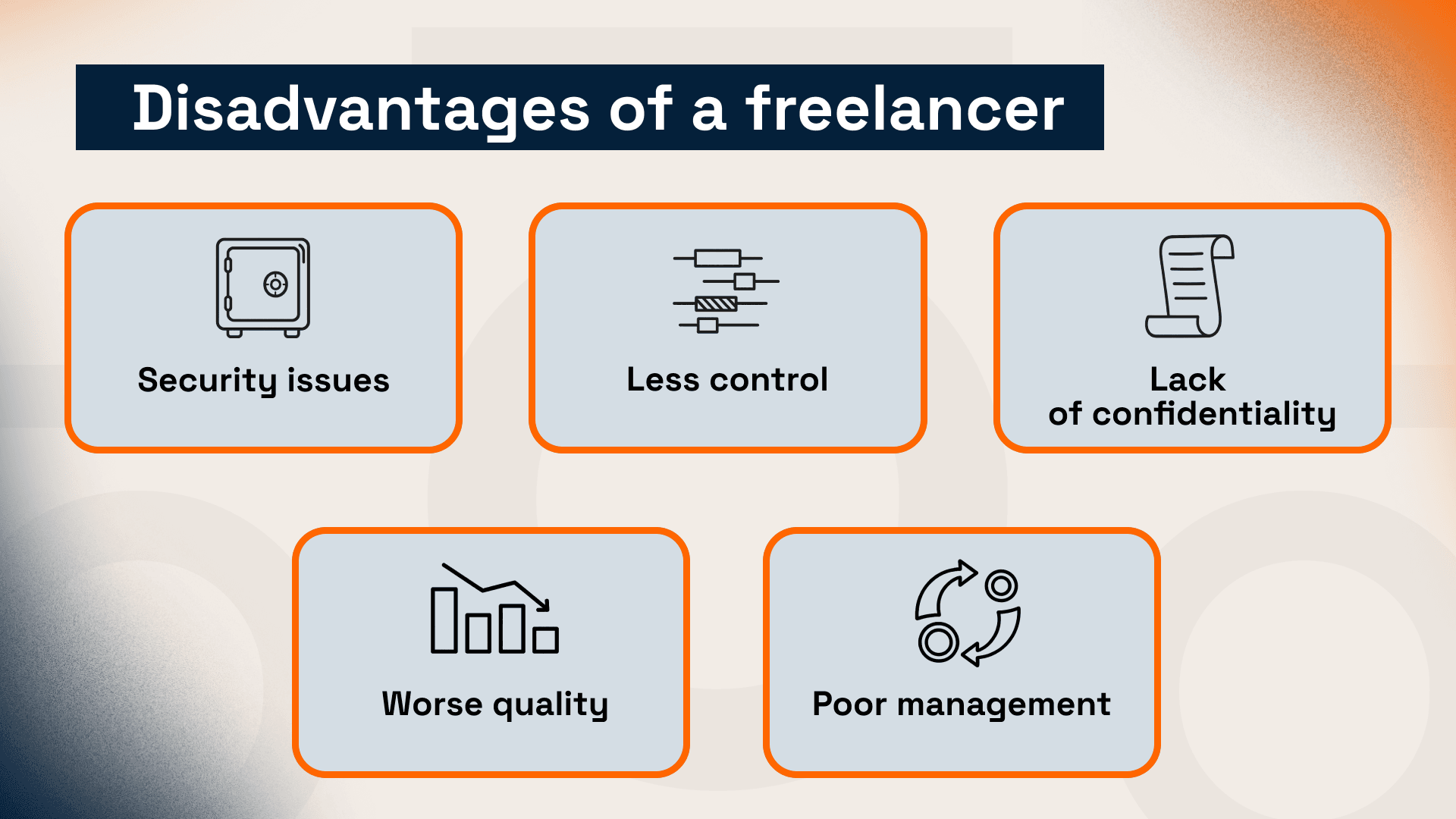
In addition, independent experts typically don’t have structured quality control or clear rules for handling documents such as an NDA or intellectual property rights (IP).
To decide whether to choose a freelancer or an agency, start by evaluating the pros and cons of working with an independent specialist.
Advantages
Disadvantages
Low price
Single point of failure in case of illness or vacation
Quick start
Limited time when you need it
Narrow expertise
Lack of QA and PM
Minimum bureaucracy and processes
Difficulties with NDA/IP, security, and liability
Fast coordination and communication
Risk of delays and missed deadlines
A contractor is a good option for tasks with a clear project scope and budget, where the business doesn’t expect complex integrations or future scaling.
What are the strengths and trade-offs of a service company?
What does having agency mean? This format works for companies that need stable delivery, clear responsibility for the final result, and transparent control over the entire workflow.
Responsibility and management are structured because a service provider handles:
-
quality control
-
quick replacement of specialists when needed
-
project management
-
coordinated teamwork
-
compliance with standards and security requirements
-
SLA commitments
The drawbacks are a higher cost compared to external specialists, a longer onboarding phase before the start, and sometimes an excessive number of processes that can slow things down.
How do solo consultants and service providers compare in cost, speed, and quality?
An independent contributor usually starts faster and costs less, making this option suitable for small or urgent tasks. A professional team provides more stable quality, transparent processes, and predictable outcomes, which matter for complex or long-term projects.
During a cost comparison, it’s important to look not only at the hourly rate but at the full picture. Working with a solo consultant may seem cheaper, but part of the workflow shifts to the business. For example, task organization, quality checks, and deadline control. With a managed service provider, these functions are already included. The price is higher, but it removes a portion of the operational workload from the company.
How to choose the best format of cooperation? Let’s compare the key characteristics of both models.
Characteristics
Self-employed professional
Full-service provider
Quality vs Speed
Starts quickly, but the quality depends on one person
Provides consistent quality, but takes longer to start
Scalability
Does not scale without losing speed; one specialist works
Expands the team to meet the needs of the project
Difference in collaboration
Works punctually, performs specific tasks
Works systematically, manages the project comprehensively
How to assess risks when choosing between a contractor and a managed team?
An independent worker works independently, so all risks depend on one person. A production team follows established rules and has clear processes for handling NDA, IP, access management, and security, which makes the collaboration more reliable.
To help you decide which model — agency vs. freelancer — fits your project, use our quick risk and readiness checklist. It lets you review the key points before making a decision.
Parameter
What to do?
NDA
Ask for an NDA template or send your own.
Make sure the partner is ready to sign it.
IP rights
Check the contract wording to ensure that all rights to the final deliverables are fully transferred to you with no hidden conditions.
Security
Ask how the partner handles access sharing, where they store data, and whether they use secure tools for their work.
Uptime of delivery
Find out how the partner ensures continuity of work. Check whether they have backup specialists and an action plan for emergencies.
Evaluate these points to form an objective approach to risk management and avoid misunderstandings during the collaboration.
When should you choose a solo consultant, and when is a project team a better fit?
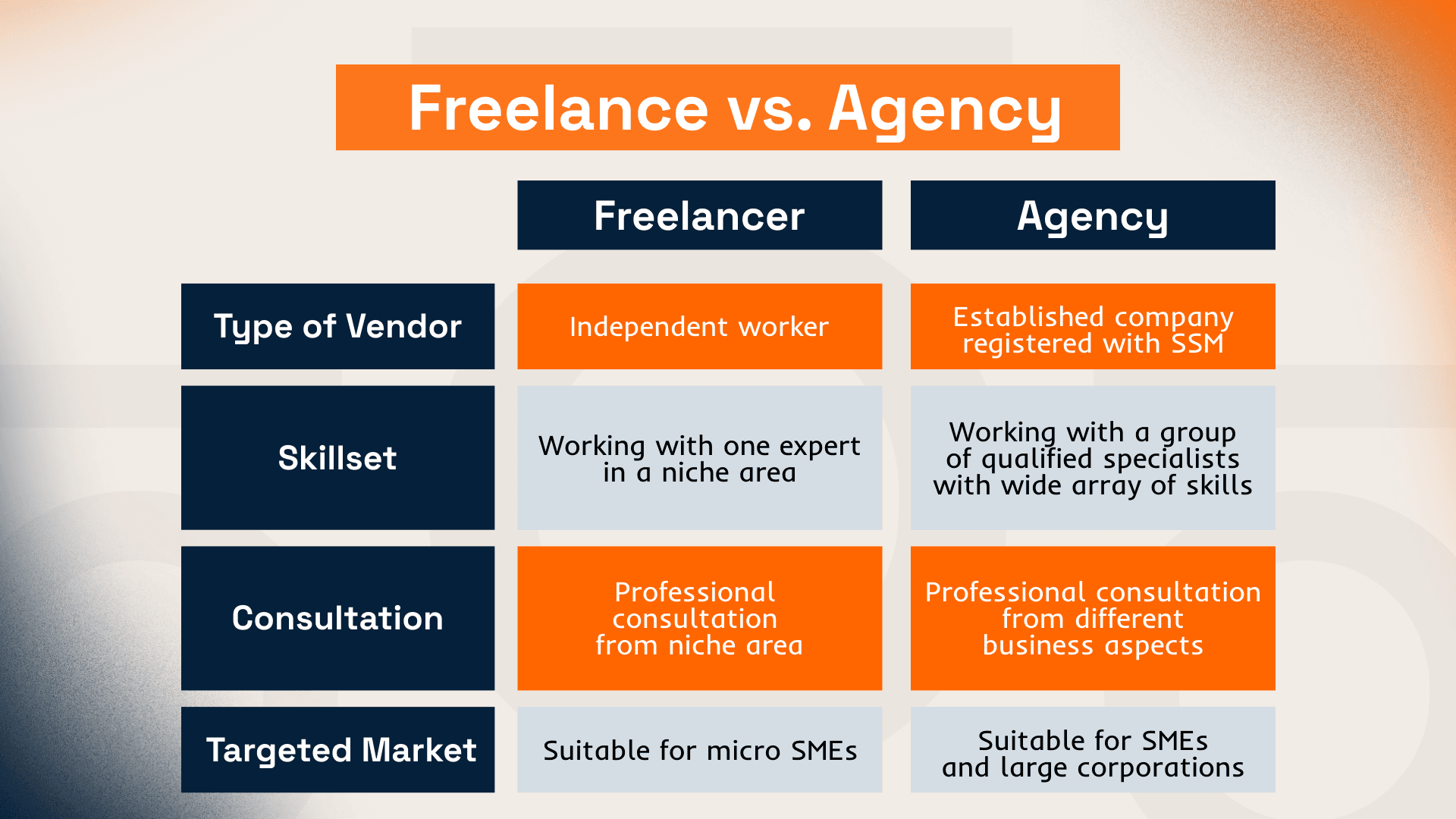 Both options have their distinct advantages and disadvantages. Weigh all the pros and cons to decide on the contractor that best meets your needs. One specialist vs. a team? If you require prompt, flexible, and personalized service, a self-employed individual is the ideal choice. However, if the project requires a comprehensive organizational approach, a project team becomes a reliable partner.
The on-demand specialist model works well for:
-
small tasks with a clearly defined scope
-
work that one person can handle without additional specialists
-
short projects, test ideas, or quick hypothesis checks
The full-service provider model is better for:
-
projects that require specialists with different skill sets
-
tasks with strict deadlines
-
work that demands clear agreements on timelines and quality
-
complex system integrations or ongoing product development
To understand whether to hire freelancer vs. agency define your needs, scope, budget, and the strategic importance of the project.
What is outstaffing, and when is it better than hiring outstaffing vs. freelancer vs. agency?
Outstaffing is a collaboration model that combines the strengths of both independent contractors and operations teams. You get skilled specialists who can jump into tasks quickly and deliver results, while the service company, like Osmium, handles all legal, accounting, and administrative matters such as payroll, taxes, vacations, and other formalities.
This approach makes it easy to scale your team. You can expand or reduce the lineup based on project requirements without dealing with HR complications.
Outstaffing works for any type of task — from building an MVP and automating processes to quality assurance and team extension. At Osmium, we find the best-fit solution to deliver your project with quality, on time, and within the planned budget.
How to make a rational decision?
To choose the right collaboration model, evaluate three key parameters.
-
Identify the scope and complexity of the tasks. Is it a small, one-off assignment or a full project with multiple stages?
-
Assess potential challenges and responsibilities. How serious would the impact be if a specialist became unavailable and work stopped?
-
Review quality expectations along with SLA requirements. Do you need clear standards, quality checks, plus predictable timelines?
After going through these points, it becomes easier to understand the main concepts and choose a format that fits your company’s goals. This allows you to determine not only whether to work with a freelance agent or a managed team, but also if outstaffing could be the most suitable choice.
If you need to evaluate your project, budget, and risks, or compare the detailed advantages and disadvantages of each collaboration model, write to us, and we’ll walk through your case together.